Blog title heading will go here
Lorem ipsum dolor sit amet, consectetur adipiscing elit. Suspendisse varius enim in eros elementum tristique. Duis cursus, mi quis viverra ornare, eros dolor interdum nulla, ut commodo diam libero vitae erat. Aenean faucibus nibh et justo cursus id rutrum lorem imperdiet. Nunc ut sem vitae risus tristique posuere.
- Remove the current class from the content27_link item as Webflows native current state will automatically be applied.
- To add interactions which automatically expand and collapse sections in the table of contents select the content27_h-trigger element, add an element trigger and select Mouse click (tap)
- For the 1st click select the custom animation Content 28 table of contents [Expand] and for the 2nd click select the custom animation Content 28 table of contents [Collapse].
- In the Trigger Settings, deselect all checkboxes other than Desktop and above. This disables the interaction on tablet and below to prevent bugs when scrolling.
Medium length heading goes here
Lorem ipsum dolor sit amet, consectetur adipiscing elit. Suspendisse varius enim in eros elementum tristique.
What Carpet Stretching Is (In Plain English)
Carpet stretching is the process of pulling loose carpet tight again so it lays flat, smooth, and properly secured to the edges of the room.
Over time, carpet can loosen and develop ripples, waves, or wrinkles. When that happens, the carpet is no longer under proper tension — and that’s when problems start.
A professional carpet stretching service uses specialized tools to gently but firmly pull the carpet back into place, reattach it to the tack strips along the walls, and trim it for a clean, finished look. Once stretched correctly, the carpet looks smoother, feels better underfoot, and wears more evenly.
This is not a temporary fix and it’s not cosmetic fluff. When done properly, carpet stretching restores the way your carpet was meant to function.
Many homeowners assume loose carpet means it’s old or needs to be replaced — but in many cases, the carpet itself is still in good condition. It just isn’t tight anymore.
That’s where stretching comes in.
What Causes Carpet to Become Loose
Carpet doesn’t loosen overnight — it’s usually the result of everyday use and a few common factors.
One of the biggest causes is foot traffic. Walking across the same paths day after day slowly relaxes the carpet backing, especially in hallways, living rooms, and stair landings.
Temperature and humidity changes also play a role. Carpet expands and contracts with seasonal shifts, which can gradually reduce tension if it wasn’t stretched tightly to begin with.
Another common cause is improper installation. If the carpet wasn’t power-stretched during installation, it may look fine at first but develop ripples within months or a few years.
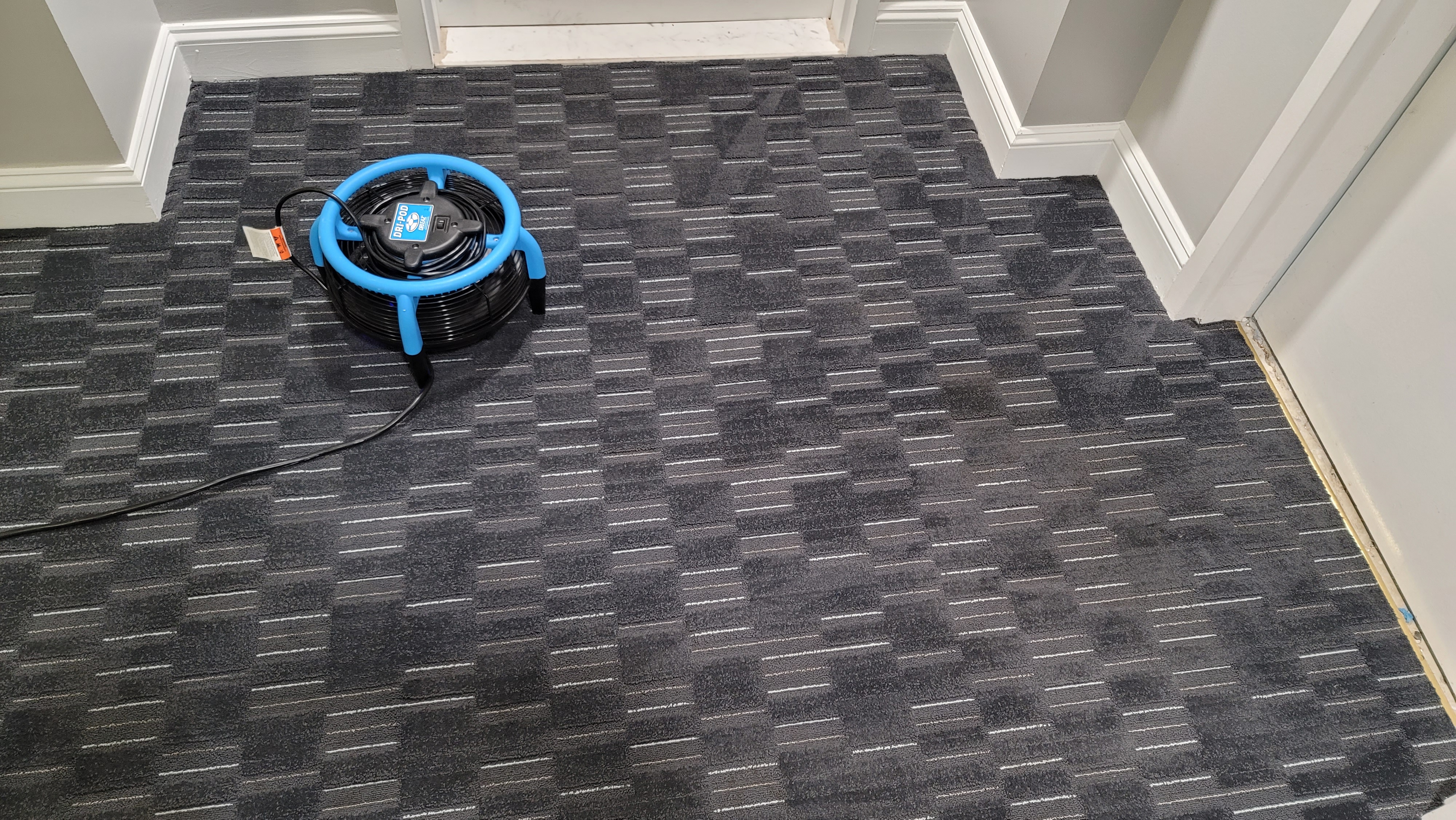
Professional carpet cleaning can also temporarily reveal looseness. Cleaning itself doesn’t damage carpet, but the combination of moisture and agitation can cause ripples to appear during or shortly after the cleaning process. In many cases, once the carpet fully dries and settles, those ripples relax and the carpet looks flat again.
Even when the carpet appears normal after drying, this is often an early indicator that the carpet isn’t as tight as it should be — and that stretching may be needed in the future to prevent permanent looseness.
Signs Your Carpet Needs Stretching
Not sure if your carpet actually needs to be stretched? Here are the most common signs homeowners notice:

- Ripples or waves across the carpet
- Wrinkles that appear after vacuuming or cleaning
- Carpet that feels loose or shifts underfoot
- Areas where the carpet is pulling away from the wall
- Visible buckling near doorways or transitions
- Tripping hazards, especially in high-traffic areas
A wave or ripple forms when you slide heavy furniture
If you move a couch, bed, or other heavy furniture and notice the carpet bunching up or creating a visible wave behind it, that’s a clear sign the carpet isn’t under proper tension.
If you’re seeing one or more of these issues, stretching is often the correct fix — and the sooner it’s done, the better the result.
Why Ignoring Loose Carpet Makes Things Worse
Loose carpet isn’t just an appearance issue. When carpet isn’t properly tensioned, it wears out faster.
Every step on a loose area causes extra movement in the fibers and backing. Over time, that friction can lead to premature wear, seam separation, or permanent damage that can’t be reversed.
There’s also a safety concern. Ripples and buckles increase the risk of trips and falls, especially for children, seniors, or guests who aren’t familiar with your home.
What starts as a small ripple can turn into a much larger problem — and waiting too long can reduce how effective stretching will be later.
Carpet Stretching vs Replacement: The Cost Reality
Many homeowners worry that loose carpet automatically means replacement. In reality, stretching is often a fraction of the cost of new carpet.
If the carpet fibers are still in good shape and the structure underneath hasn’t broken down, stretching can dramatically improve how the carpet looks and performs — without the expense, disruption, or downtime of replacement.
Replacement only makes sense when the carpet is truly worn out, damaged beyond repair, or no longer structurally sound. Stretching is about restoring what you already have, not masking damage.
A professional evaluation can quickly determine which option makes sense for your situation.
Why Power Stretching Matters
Not all carpet stretching is the same.
Professional carpet stretching should always be done with a power stretcher, not a knee kicker. Power stretchers apply consistent, controlled tension across the entire room, resulting in a tighter, longer-lasting finish.


Knee kickers are designed for small adjustments, not full-room stretching. When used on their own, they can’t apply the consistent tension needed to properly secure the carpet across the entire space. In some cases, the teeth of a knee kicker can also leave permanent marks or damage the carpet backing, depending on the carpet type.
Large rooms, long spans, and plush carpets often require additional tools and experience to stretch properly — which is why technique and setup matter just as much as the service itself.
How Long Does Carpet Stretching Last?
When done correctly using proper power-stretching tools, carpet stretching can last for many years. In most cases, the carpet will remain tight for the remainder of its usable life.
The main exceptions are situations involving backing separation, moisture damage, or poor original installation. In those cases, stretching may still help temporarily, but it may not be a permanent solution.
When Carpet Stretching Is Not Enough
In many cases, this is due to backing separation, also known as delamination. Carpet is made up of two main layers that are bonded together — the fiber layer you walk on and the backing underneath that holds everything in place.
When those layers begin to separate, the carpet can no longer hold proper tension. Stretching becomes difficult and repairs like seaming or patching may not hold the way they should.
Subscribe to our newsletter
Lorem ipsum dolor sit amet, consectetur adipiscing elit. Suspendisse varius enim in eros elementum tristique.
FAQs
Lorem ipsum dolor sit amet, consectetur adipiscing elit. Suspendisse varius enim in eros elementum tristique.
Lorem ipsum dolor sit amet, consectetur adipiscing elit. Suspendisse varius enim in eros elementum tristique. Duis cursus, mi quis viverra ornare, eros dolor interdum nulla, ut commodo diam libero vitae erat. Aenean faucibus nibh et justo cursus id rutrum lorem imperdiet. Nunc ut sem vitae risus tristique posuere.
Still have questions?
Lorem ipsum dolor sit amet, consectetur adipiscing elit.